
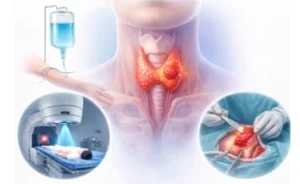
Thyroid cancer develops in the thyroid gland, a small but essential organ that regulates metabolism, heart rate, and body temperature. When diagnosed early, thyroid cancer is among the most treatable cancers, with excellent long-term outcomes. India has become a preferred destination for thyroid cancer treatment due to its experienced specialists, modern oncology infrastructure, and cost-effective care.
The average cost of thyroid cancer treatment in India starts at around USD 2,000 (₹2 lakh) and may increase to USD 8,000 (₹10 lakh) or more, depending on the cancer type, stage, and treatment approach recommended by the medical team.
Cost of Thyroid Cancer Treatment in India
Average Treatment Cost Range
- Starting cost: USD 2,000 (₹2 lakh)
- Upper range: USD 8,000+ (₹10 lakh+)
The final cost varies based on disease complexity, hospital selection, and the combination of therapies required.
Cost of Different Thyroid Cancer Treatments in India
| Treatment Type | Approx. Cost (INR) | Approx. Cost (USD) |
| Surgery (Thyroidectomy) | ₹2,00,000 – ₹4,50,000 | $2,400 – $5,400 |
| Radioactive Iodine (RAI) Therapy | ₹1,50,000 – ₹3,00,000 | $1,800 – $3,600 |
| External Beam Radiation Therapy (EBRT) | ₹2,50,000 – ₹5,00,000 | $3,000 – $6,000 |
| Chemotherapy (per cycle) | ₹1,00,000 – ₹2,50,000 | $1,200 – $3,000 |
| Targeted Therapy (monthly) | ₹2,50,000 – ₹5,50,000 | $3,000 – $6,600 |
| Immunotherapy (monthly) | ₹2,50,000 – ₹6,00,000 | $3,000 – $7,200 |
Costs are indicative and may vary depending on clinical findings and hospital protocols.
Factors That Influence Thyroid Cancer Treatment Cost in India
Several variables can affect the overall expense of treatment:
- Stage and Type of Cancer
Early-stage thyroid cancer may require surgery alone, while advanced or aggressive forms may need additional therapies. - Treatment Modality
Surgery, radioactive iodine therapy, radiation, targeted therapy, or immunotherapy each carry different cost implications. - Hospital and City
Private hospitals in metropolitan cities generally have higher costs compared to trust-run or government institutions. - Doctor’s Expertise and Technology Used
Highly experienced specialists and advanced techniques such as robotic surgery or precision radiation may increase costs. - Hospital Stay and Follow-Up Care
Length of admission, ICU care, diagnostics, medications, and follow-up visits contribute to total expenses.
What Is Thyroid Cancer?
Thyroid cancer occurs when abnormal cells grow uncontrollably in the thyroid gland. It is usually slow-growing and highly treatable when identified early.
Main Types of Thyroid Cancer
- Papillary Thyroid Carcinoma: Most common and slow-growing
- Follicular Thyroid Carcinoma: Can spread to lungs or bones
- Medullary Thyroid Cancer: Often linked to genetic mutations
- Anaplastic Thyroid Cancer: Rare and aggressive
Common Symptoms of Thyroid Cancer
Symptoms may be subtle in early stages and include:
- A lump or swelling in the neck
- Persistent hoarseness or voice changes
- Difficulty swallowing or breathing
- Neck or throat pain
- Enlarged lymph nodes
- Unexplained weight loss or fatigue
Any persistent neck lump should be evaluated by a medical professional.
How Is Thyroid Cancer Diagnosed?
Doctors use a combination of clinical evaluation and imaging tests:
- Physical Examination of the neck
- Ultrasound to assess thyroid nodules
- Fine Needle Aspiration (FNA) Biopsy for definitive diagnosis
- Blood Tests (TSH, thyroglobulin, calcitonin)
- CT or MRI Scans to assess spread
- Radioactive Iodine Scan for selected cancer types
- Genetic Testing, when indicated (e.g., medullary thyroid cancer)
Treatment Options for Thyroid Cancer
Treatment depends on cancer type, stage, and patient health.
Common Treatment Approaches
- Surgery (Thyroidectomy): Partial or total removal of the thyroid gland
- Radioactive Iodine Therapy: Destroys remaining thyroid tissue or cancer cells
- External Radiation Therapy: Used in advanced or recurrent cases
- Chemotherapy: Reserved for aggressive or metastatic cancers
- Targeted Therapy: For cancers with specific genetic mutations
- Immunotherapy: Used in selected advanced cases
- Thyroid Hormone Replacement Therapy: Lifelong medication after surgery
Success Rate of Thyroid Cancer Treatment in India
Thyroid cancer has one of the highest survival rates among cancers:
- Overall 5-year survival rate: Approximately 95–98%
- Outcomes are especially favorable for papillary and follicular thyroid cancers
Indian hospitals report results comparable to international standards due to advancements in oncology care.
Why Choose India for Thyroid Cancer Treatment?
- Highly experienced endocrinologists and oncologists
- Advanced diagnostic and treatment technologies
- Treatment costs 60–80% lower than many Western countries
- Short waiting times and personalized care
- Comprehensive support for international patients
Leading Hospitals for Thyroid Cancer Treatment in India
- Apollo Hospitals, Chennai
- Fortis Memorial Research Institute, Gurugram
- Medanta – The Medicity, Gurugram
- Kokilaben Dhirubhai Ambani Hospital, Mumbai
- BLK-Max Super Speciality Hospital, New Delhi
- Manipal Hospitals, Bengaluru
- Artemis Hospital, Gurugram
How Sanjivani Care Supports Thyroid Cancer Patients
Sanjivani Care is a trusted medical tourism and healthcare facilitation company in India that assists patients by:
- Coordinating consultations with experienced thyroid cancer specialists
- Guiding patients in hospital and treatment selection
- Supporting international patients with travel, accommodation, and care coordination
- Ensuring continuity of care before, during, and after treatment
Sanjivani Care focuses on ethical guidance, transparency, and patient-centered coordination, without offering medical guarantees.
Medical Disclaimer
This content is intended for informational purposes only and does not replace professional medical advice. Diagnosis and treatment decisions should always be made in consultation with qualified healthcare professionals.