
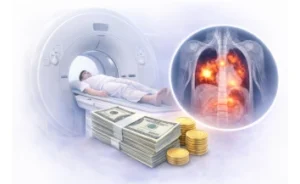
A PET-CT scan (Positron Emission Tomography – Computed Tomography) is a highly advanced diagnostic imaging test that combines metabolic information with detailed anatomical images. It plays a critical role in cancer diagnosis, staging, treatment planning, and response assessment, and is also used in select neurological and cardiac conditions.
In India, the cost of a PET-CT scan generally starts from around USD 180 (INR 15,000) and may go up to USD 800 (INR 75,000) depending on the type of scan and clinical requirements .
Many international patients choose India for PET-CT imaging due to modern technology, skilled radiologists, and significantly lower costs compared to Western countries. Healthcare facilitators such as Sanjivani Care help patients identify suitable diagnostic centers, coordinate appointments, and navigate their medical journey in India with clarity and support.
PET-CT Scan Price by Type in India
| Type of PET-CT Scan | Approximate Cost (INR) | Approximate Cost (USD) |
| Whole Body PET-CT Scan | ₹18,000 – ₹35,000 | $220 – $420 |
| Brain PET-CT Scan | ₹15,000 – ₹30,000 | $180 – $360 |
| Cardiac PET-CT Scan | ₹20,000 – ₹40,000 | $240 – $480 |
| Oncology-Specific PET-CT | ₹20,000 – ₹45,000 | $240 – $540 |
| PSMA PET-CT (Prostate Cancer) | ₹25,000 – ₹55,000 | $300 – $660 |
| DOTA PET-CT (Neuroendocrine Tumors) | ₹25,000 – ₹60,000 | $300 – $720 |
Prices are indicative and may vary based on hospital, city, and individual clinical needs.
Factors That Influence PET-CT Scan Cost in India
Several elements can affect the final price of a PET-CT scan:
Type of Scan
Specialized scans such as PSMA or DOTA PET-CT generally cost more than standard whole-body scans.
Hospital and City
Premium private hospitals and major metropolitan cities (Delhi NCR, Mumbai, Chennai, Bengaluru, Hyderabad) often have higher pricing than smaller cities.
Radiotracer and Contrast Use
Certain tracers or contrast agents increase imaging precision but may add to the cost.
Technology and Equipment
New-generation PET-CT scanners with higher resolution and faster imaging capabilities may be priced higher.
Patient-Specific Requirements
Longer scan time, additional imaging sequences, or special monitoring can increase overall expense.
What Is a PET-CT Scan?
A PET-CT scan merges two imaging techniques:
- PET Scan: Shows how tissues and organs function using a small amount of radioactive tracer.
- CT Scan: Provides detailed cross-sectional images of internal structures.
By combining these technologies, physicians gain both functional and structural information, allowing more accurate diagnosis and clinical decision-making.
Why PET-CT Scans Are Important
PET-CT scans are especially valuable in oncology and offer several clinical advantages:
- Early detection of abnormal cellular activity
- Precise tumor localization
- Accurate cancer staging
- Treatment planning and targeting
- Monitoring response to therapy
- Identifying recurrence
This comprehensive insight supports personalized and timely treatment strategies.
How to Prepare for a PET-CT Scan
Your healthcare team will give specific instructions, but common recommendations include:
- Fasting: No food for 4–6 hours before the scan (water is usually allowed).
- Previous Reports: Carry earlier PET/CT/MRI scans and reports, if available.
- Medical Records: Bring prescriptions, biopsy reports, histopathology results, and treatment summaries.
- Medications: Inform your doctor about current medications.
- For Diabetic Patients: Follow special dietary and medication instructions provided by the care team.
- Blood Tests: Recent creatinine and urea levels may be required before contrast use.
Choosing a PET-CT Center in India
When selecting a diagnostic facility, consider:
- Accreditation and quality standards
- Experience of nuclear medicine specialists
- Availability of modern PET-CT equipment
- Transparent pricing and reporting
- Integration with oncology or specialty care teams
How Sanjivani Care Supports Patients
Sanjivani Care is a healthcare facilitation and medical tourism company in India that assists patients with:
- Identifying reliable PET-CT centers
- Scheduling diagnostic appointments
- Coordinating reports and follow-ups
- Supporting travel, accommodation, and hospital communication
This coordinated approach helps patients focus on their health while logistical aspects are managed efficiently.
Medical Disclaimer
This content is for informational purposes only and does not substitute professional medical advice. Always consult a qualified healthcare provider for diagnosis and treatment decisions.