
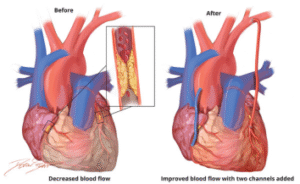
Coronary Artery Bypass Graft (CABG) surgery is a well-established cardiac procedure used to restore blood flow to the heart when coronary arteries become severely narrowed or blocked. These blockages restrict oxygen-rich blood to the heart muscle and may lead to chest pain (angina), heart failure, or heart attack if left untreated.
India has become a trusted destination for CABG surgery due to experienced cardiothoracic surgeons, modern cardiac infrastructure, and significantly lower treatment costs, while following internationally accepted safety and quality standards.
What Is the Cost of CABG Surgery in India?
The cost of CABG surgery in India generally starts from around USD 4,000 and may range up to USD 7,000 or more, depending on medical complexity, number of grafts required, and hospital selection.
CABG Surgery Cost Comparison (International)
| Country | Average Cost (USD) | Upper Cost Range (USD) |
| India | 4,500 | 7,000 |
| United States | 40,000 | 80,000+ |
| United Kingdom | 25,000 | 45,000+ |
| Singapore | 18,000 | 30,000+ |
| Thailand | 11,000 | 17,000+ |
| UAE | 15,000 | 25,000+ |
CABG surgery in India is often 5–10 times more affordable than in many Western countries, without compromising clinical standards.
CABG Surgery Cost in Major Indian Cities
| City | Cost Range (INR) | Approx. Cost (USD) |
| Delhi NCR | ₹3,50,000 – ₹6,00,000 | $4,200 – $7,200 |
| Mumbai | ₹3,75,000 – ₹6,50,000 | $4,500 – $7,800 |
| Bengaluru | ₹3,60,000 – ₹6,20,000 | $4,300 – $7,500 |
| Chennai | ₹3,40,000 – ₹6,00,000 | $4,100 – $7,200 |
| Hyderabad | ₹3,50,000 – ₹5,80,000 | $4,200 – $7,000 |
| Kolkata | ₹3,20,000 – ₹5,50,000 | $3,900 – $6,700 |
Factors That Influence CABG Surgery Cost in India
The total expense of CABG surgery may vary depending on several clinical and logistical factors:
- Number of Bypasses Required
Single, double, triple, or quadruple bypass procedures influence surgical duration and complexity. - Hospital Category
Government hospitals, private cardiac centers, and internationally accredited hospitals follow different pricing models. - Surgeon’s Experience
Senior cardiothoracic surgeons with extensive training may have higher professional fees. - Patient’s Overall Health
Conditions such as diabetes, obesity, kidney disease, or hypertension can increase pre- and post-operative care needs. - Post-Surgical Care
ICU stay, medications, physiotherapy, and length of hospitalization impact total cost.
Understanding Coronary Artery Disease (CAD)
Coronary artery disease (CAD) develops when plaque—made of cholesterol, fat, and calcium—builds up inside the coronary arteries. This process, known as atherosclerosis, causes arteries to narrow and harden, reducing blood flow to the heart muscle.
According to global health data, cardiovascular diseases remain a leading cause of mortality worldwide. When medication and lifestyle changes fail to control symptoms or disease progression, surgical intervention such as CABG may be recommended.
Benefits of CABG Surgery
CABG surgery is designed to improve blood supply to the heart and may offer the following benefits when medically indicated:
- Significant reduction or elimination of angina symptoms
- Improved heart muscle function and exercise tolerance
- Lower risk of future heart attacks in selected patients
- Better long-term outcomes in individuals with complex or multi-vessel disease
- Improved quality of life for patients with severe coronary blockages
The effectiveness of CABG depends on timely intervention, patient health, and adherence to post-surgery lifestyle changes.
Who May Need CABG Surgery?
CABG surgery may be advised for patients with:
- Severe blockage in one or more coronary arteries
- Multi-vessel coronary artery disease
- Left main coronary artery disease
- Reduced left ventricular function
- History of heart attack with persistent blockages
- Symptoms not adequately controlled with medication or angioplasty
Emergency CABG may be performed in certain life-threatening situations, such as acute heart attack with critical blockages.
Pre-Surgical Evaluation Before CABG
Before surgery, cardiologists typically conduct comprehensive assessments, including:
- Blood tests
- Chest X-ray
- Electrocardiogram (ECG)
- Echocardiography
- Coronary angiography
- Cardiac catheterization (if required)
These investigations help confirm diagnosis, assess severity, and plan the safest surgical approach.
What Happens During CABG Surgery?
During the Procedure
- General anesthesia is administered to ensure comfort and safety
- An incision is made in the chest to access the heart
- A healthy blood vessel (graft) is taken from the leg, chest, or arm
- The graft is used to bypass blocked coronary arteries
- Surgery may be performed using a heart-lung machine (on-pump) or on a beating heart (off-pump), depending on clinical need
After the Procedure
- Patients are closely monitored in the ICU for 1–2 days
- Gradual recovery continues in a regular hospital room
- Pain control, breathing exercises, and early mobilization are encouraged
Recovery After CABG Surgery
- Average hospital stay: 5–7 days
- Initial recovery: 2–3 weeks
- Full recovery: 6–12 weeks, depending on the surgical approach
Most patients report improved symptoms and energy levels after recovery. Cardiac rehabilitation, medication adherence, and lifestyle changes play a key role in long-term success.
Why Choose India for CABG Surgery?
- Highly skilled cardiothoracic surgeons
- Advanced cardiac operation theaters and ICUs
- Availability of off-pump CABG techniques
- Comprehensive diagnostic and monitoring facilities
- Cost-effective treatment without compromising safety
- Well-developed infrastructure for international patients
How Sanjivani Care Supports CABG Patients in India
Sanjivani Care is a medical tourism and healthcare facilitation company that assists patients seeking CABG surgery in India by:
- Helping patients connect with experienced cardiac hospitals and specialists
- Coordinating medical evaluations and treatment planning
- Assisting international patients with travel, medical visas, accommodation, and logistics
- Providing transparent guidance on treatment options and estimated costs
Sanjivani Care’s role is focused on patient coordination and support, while all clinical decisions and procedures are managed by licensed medical professionals.
Medical Disclaimer
This information is provided for educational purposes only and does not replace professional medical advice. CABG surgery suitability, risks, and outcomes vary by individual. Patients should consult qualified cardiologists for personalized diagnosis and treatment recommendations.