
Generic selectors
Exact matches only
Search in title
Search in content
Post Type Selectors
Search in posts
Search in pages

Kidney Transplant Cost in India

Success Rate
99%

Recovery Time
2 week

Hospital Stay
5days

Treatment Type
Surgical

Kidney transplant cost in india

A kidney transplant is a well-established and life-enhancing treatment for individuals with end-stage renal disease (ESRD), where the kidneys are no longer able to perform essential filtering functions. Compared to long-term dialysis, transplantation often offers better survival outcomes, improved energy levels, and a higher quality of life for eligible patients.

India has become a preferred destination for kidney transplantation due to its experienced nephrology teams, advanced surgical infrastructure, ethical transplant regulations, and comparatively affordable treatment costs. This guide explains kidney transplant costs in India, procedure types, influencing factors, and important considerations for patients and families.

What Is the Cost of a Kidney Transplant in India?

The cost of a kidney transplant in India generally ranges from USD 10,000 to USD 18,000, depending on the type of transplant, hospital selection, and patient-specific medical requirements.

Kidney Transplant Cost by Type

Type of Kidney Transplant Estimated Cost (USD)
Living Donor Transplant $11,000 – $15,000
Deceased Donor Transplant $13,800 – $18,200
Pre-emptive Transplant $12,000 – $16,000

These figures usually cover surgery and hospitalization. Additional expenses may apply for medications, diagnostics, and long-term follow-up care.

Kidney Transplant Cost in Major Indian Cities

City Approximate Cost (USD)
Delhi $11,000 – $15,000
Mumbai $13,700 – $18,000
Bengaluru $11,000 – $15,000
Chennai $11,000 – $15,000
Hyderabad $11,000 – $15,000

Costs can vary based on hospital infrastructure, surgeon expertise, and post-operative care needs.

Factors That Influence Kidney Transplant Cost in India

Several clinical and logistical factors affect the overall cost of kidney transplantation:

  • Type of Transplant: Living donor transplants are generally less expensive than deceased donor transplants due to shorter waiting times and streamlined logistics.
  • Hospital Infrastructure: Private multispecialty hospitals with advanced ICUs and transplant units may charge more than government facilities.
  • Medical Team Expertise: Experienced transplant surgeons, nephrologists, and multidisciplinary teams influence treatment cost.
  • Pre- and Post-Operative Care: Diagnostic tests, donor compatibility evaluations, ICU stay, and follow-up care add to the total expense.
  • Legal & Administrative Requirements: Costs related to donor screening, documentation, and compliance with transplant laws.
  • Post-Transplant Medications: Lifelong immunosuppressive therapy is a significant ongoing cost.

Transparent treatment planning helps patients anticipate and manage these expenses effectively.

What Is the Success Rate of Kidney Transplantation in India?

Kidney transplantation in India demonstrates strong clinical outcomes when performed at experienced centers:

  • Living donor transplants: ~90–95% graft survival at one year
  • Deceased donor transplants: ~85–90% graft survival at one year
  • Five-year graft survival: Approximately 80%
  • Ten-year graft survival: Around 40–50%

Long-term success depends on medication adherence, regular follow-ups, and lifestyle modifications.

What Is a Kidney Transplant?

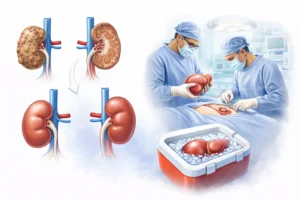
A kidney transplant is a surgical procedure in which a healthy kidney from a living or deceased donor is implanted into a patient with kidney failure. The new kidney is typically placed in the lower abdomen and connected to blood vessels and the bladder, while the patient’s non-functioning kidneys are usually left in place unless medically indicated.

Although transplantation significantly improves quality of life, recipients must commit to lifelong follow-up and immunosuppressive medication to prevent organ rejection.

Common Causes of End-Stage Renal Disease (ESRD)

  • Diabetes mellitus
  • Long-standing uncontrolled hypertension
  • Chronic glomerulonephritis
  • Polycystic kidney disease
  • Congenital or inherited kidney disorders

For patients with ESRD, treatment options include dialysis or kidney transplantation, with transplantation often offering a more durable and lifestyle-friendly solution.

Types of Kidney Transplants Performed in India

Living Donor Kidney Transplant

A kidney is donated by a living person, often a family member or compatible relative. This option allows planned surgery, shorter waiting times, and generally better long-term outcomes.

Deceased Donor Kidney Transplant

The kidney is obtained from a brain-dead donor who has consented to organ donation. Allocation is based on medical urgency, compatibility, and waiting time.

Pre-emptive Kidney Transplant

Performed before dialysis becomes necessary, this approach is associated with improved patient outcomes and fewer long-term complications when feasible.

Pre-Transplant Evaluation and Preparation

Before transplantation, patients undergo comprehensive assessments to ensure suitability:

Eligibility Assessment

  • Confirmation of surgical fitness
  • Evaluation of coexisting medical conditions
  • Ability to follow long-term treatment plans

Diagnostic Work-Up

  • Blood tests and tissue matching
  • Imaging studies (X-ray, CT, MRI)
  • Cardiovascular evaluation
  • Psychological assessment
  • Additional tests based on individual health status

Early evaluation and proper preparation significantly improve transplant outcomes.

Post-Surgery Recovery and Long-Term Care

After surgery, patients are closely monitored in the hospital for several days to a week:

  • The transplanted kidney may begin functioning immediately or after a short delay
  • Temporary dialysis may be required in some cases
  • Most patients resume daily activities within 6–8 weeks
  • Regular blood tests are essential to monitor kidney function
  • Lifelong immunosuppressive medication is mandatory

Consistent follow-up is critical, especially during the first few months after transplant.

Why India Is a Preferred Destination for Kidney Transplantation

India offers several advantages for kidney transplant patients:

  • Experienced transplant surgeons and nephrologists
  • Advanced surgical and diagnostic facilities
  • Ethical transplant practices under the Transplantation of Human Organs Act (THOA)
  • Shorter waiting times for living donor transplants
  • Significantly lower treatment costs compared to many countries

How Sanjivani Care Supports Kidney Transplant Patients in India

Sanjivani Care is a trusted medical tourism and healthcare facilitation company in India that assists patients seeking kidney transplant treatment with clarity, coordination, and transparency.

Their support typically includes:

  • Helping patients identify suitable transplant hospitals and specialists
  • Coordinating medical records and treatment planning
  • Assisting international patients with travel, accommodation, and hospital logistics
  • Supporting continuity of care before and after transplantation

Sanjivani Care focuses on informed decision-making and ethical patient support, without making exaggerated claims or guarantees.

Medical Disclaimer

This content is intended for informational purposes only and does not replace professional medical advice. Kidney transplant eligibility, outcomes, and costs vary based on individual medical conditions. Always consult a qualified nephrologist or transplant specialist for personalized evaluation and treatment planning.

Our Services for Kidney Transplant

Transparent - Professional - Without Hassles

FAQ’S

What is a kidney transplant?

A kidney transplant is a surgery aimed at placing a healthy kidney inside the body of a person whose kidney has failed to work properly. The donated kidney comes from someone who has recently died or from a living person who can be a friend, relative, etc. Despite being a good solution for kidney failures, a transplant is not a cure. Make sure to consult the best doctor and follow all the guidelines for better results.

What is a robotic kidney transplant?

When it comes to robotic transplants, things get exciting. However, the procedure is not entirely robotic; the surgeons here use a computer-controlled robotic arm to complete the kidney transplant surgery. During the procedure, the surgeon direct movements and use tiny instruments through a small incision to transplant the donor’s kidney.

It is a minimally invasive transplantation process that comes with a success rate of 98.6%. However, as there is a need for a high level of expertise, only those surgeons specializing in RAKT perform the transplant.

What are the types of kidney transplants?

A kidney transplant becomes necessary when the body’s organ fails to function properly. There are two types of transplant options available.

  • Deceased donor

In this case, the donor is the person who has recently passed away without any effect on the organs intended for transplant. Usually, the organs come from those people who have decided to donate their organs after their death. Thus, it makes it the most common type of kidney transplant.

  • Living donor

In this procedure, the surgeons will remove the kidney from a healthy donor and surgically place it inside the individual with kidney failure. The living donor here can be an immediate family, friend, partner, or anyone else who is more than 18 years of age.

How much time will it take for a kidney transplant in India?

Kidney transplant surgery is not an easy one to perform. Besides, there is a huge wait time for a kidney (from a deceased donor). This generally can be around four years. But once a successful kidney match is found, things can move on smoothly. The operation to remove the kidney is a major one. While it may sound straightforward but, a kidney transplant is a complicated surgery that requires 2 to 3 hours to complete.

Who can get a kidney transplant in India?

Any person who qualifies for ESRD can get a kidney transplant in India. Here are some criteria or requirements the person needs to meet.

  • They must be healthy enough to undergo such a serious surgery and a lifelong medication routine.
  • The patient must have the willingness to follow all the guidelines and advice of the doctor. This also includes taking medicines without fail.
  • If the patient has conditions like liver disease, cardiovascular disease, cancer, bone infection, etc., they will not be a good candidate for transplantation. The new kidney will likely fail after it’s transplanted.
  • The patient must be a non-smoker and avoid drugs and alcohol for a successful transplantation.

The doctor will assess the condition of the person to see if he is a good candidate for the transplantation. People with mental illness advanced age or alcoholics will not be good candidates for the same.

What are the precautions after a kidney transplant in India?

The kidney transplant process is extremely complicated and comes with a lot of risks if no proper care is taken. So here are certain tips one needs to follow after successful transplantation.

  • Spend at least a week in the hospital for proper care and recovery under the guidance of expert doctors and nurses.
  • Go for frequent check-ups as you continue to recover. It is advised to get a blood test several times a week and adjust the medications as per the advice of the doctor.
  • Staying hydrated is quite essential. 2 liters of water daily is must.
  • A healthy diet is the key to recover faster. So make sure you follow dietary restrictions properly.
  • As the anti-rejection medicines can increase the blood sugar level, make sure you keep a check on it.
  • Lastly, exercise is important for a healthy and faster recovery.

What is the kidney transplant success rate in India?

The success rate of kidney transplants varies based on various factors like overall health, patient age, the reason for kidney failure, the medical team’s expertise, and the quality of the donated organ. But if the stats are to be believed, then the kidney transplant success rate in India is very high at around 95%. It is reported that India has the highest success rate for kidney transplants across the world. There are about 7500 kidney transplantations done every year. In this case, 90% of the transplants are obtained from living donors, while the rest 10% is from deceased donors.

What is the kidney transplant cost in India?

When compared to other countries across the world, kidney transplant cost in India is a lot more affordable. It begins at INR 5 lakh. The figure includes everything from pre-transplant evaluation to surgery and the post-up. However, there are various factors that impact the kidney transplant price in India. This includes

  • Donor availability
  • Condition of the patient
  • Type of kidney transplant
  • Duration of stay in the hospital
  • Location and clinical infrastructure of the hospital
  • Lab tests and all the diagnostics
  • Fees and expertise of the surgeon
  • Additional factors like food accommodation.

What are the top 10 best kidney transplant hospitals in India?

Finding the best kidney transplant hospitals in India is not a tough job, given how India has developed itself to be the top spot for kidney transplants. A simple search for top kidney transplant hospitals in India is enough to get proper insights and information about the same. But for ease, here is the list of the top most popular hospitals to get the surgery done.

  • Indraprastha Apollo Hospital, New Delhi
  • Apollo Hospitals, Greams Road, Chennai
  • Kokilaben Dhirubhai Ambani Hospital, Mumbai
  • Fortis Memorial Research Institute, Gurgaon
  • Manipal Hospital (Old Airport Road) Bangalore
  • Ruby General Hospital, Kolkata
  • Apollo Hospitals, Jubilee Hills Hyderabad
  • Artemis Hospital, Gurgaon
  • Apollo Hospital (Bannerghatta Road) Bangalore
  • Fortis Escorts Heart Institute, New Delhi

What are the top 10 best kidney transplant surgeons in India?

Kidney transplant surgery is a complicated one. This is why the expertise of the surgeon here matters a lot for a successful procedure and recovery. The list will provide you with insights about the best kidney transplant surgeons in India.

  • Dr Sandeep Guleria- Indraprastha Apollo Hospital
  • Dr Rajesh Ahlawat- Medanta The Medicity, Delhi NCR
  • Dr Saritha Vinod- Apollo Spectra Hospital, Chennai
  • Dr Salil Jain- Fortis Memorial Research Institute, Gurgaon
  • Dr Sharad Sheth- Kokilaben Dhirubhai Ambani Hospital, Mumbai
  • Dr Harsha Jauhari- Artemis Hospital, Gurgaon
  • Dr Mihan Keshavamurthy- Fortis Hospital Bannerghatta Road, Bangalore
  • Dr Sanjay Gogoi- Manipal Hospital, Dwarka, Delhi
  • Dr Anant Kumar- Max Super Speciality Hospital, Delhi
  • Dr Joseph Thachil- Apollo Hospitals, Chennai

Take your time to research well about the top kidney transplant surgeon in India, and then make the appointment to get the process started.

How can I apply, get, or book an appointment for a kidney transplant in India?

The hospitals in India are specialized in performing kidney transplant surgery. To book an appointment for a kidney transplant in India, you need to start by finding the best hospital. Once done contact us (Alafiyameditour) to book an appointment. You will get a free consultation with the doctor for a more personalized treatment.

The surgeon, after analyzing your condition, will put you on the list of kidney transplants. When your number comes, you can proceed with the surgery. But if the donor is someone you know, you can proceed with the surgery after your consultation and pre- check-ups.

Book An Free Appointment