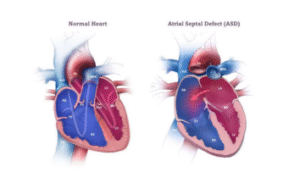
An Atrial Septal Defect (ASD) is a congenital heart condition in which a hole exists in the wall (septum) separating the two upper chambers of the heart. This opening allows oxygen-rich and oxygen-poor blood to mix, placing extra strain on the heart and lungs over time.
While small ASDs may remain asymptomatic for years, moderate to large defects often require surgical or catheter-based correction to prevent long-term complications such as heart failure, pulmonary hypertension, or abnormal heart rhythms.
India has become a preferred destination for ASD surgery due to experienced cardiac surgeons, advanced technology, and significantly lower treatment costs compared to many Western countries.
Cost of Atrial Septal Defect Surgery in India
The cost of ASD surgery in India generally ranges between USD 4,500 and USD 8,000, depending on the type of procedure and clinical complexity.
Average ASD Surgery Cost in India
| Type of Procedure | Estimated Cost (USD) |
| Catheter-Based ASD Closure | 4,500 – 6,000 |
| Open-Heart ASD Surgery | 6,000 – 8,000 |
In comparison, the same procedures may cost USD 25,000–50,000 in countries such as the United States or the United Kingdom, making India a cost-effective option for many patients.
Note: Final costs vary based on individual evaluation, hospital selection, and post-operative needs.
International Cost Comparison for ASD Surgery
| Country | Approximate Cost (USD) |
| United States | 40,000 – 50,000 |
| United Kingdom | 30,000 – 45,000 |
| Australia | 20,000 – 40,000 |
| Germany | 25,000 – 40,000 |
| Canada | 35,000 – 50,000 |
| India | 4,500 – 8,000 |
Factors That Influence ASD Surgery Cost in India
Several factors determine the total cost of atrial septal defect surgery:
- Type of Procedure
Catheter-based closure is generally less invasive and may cost less than open-heart surgery. - Hospital Selection
Government hospitals, private multispecialty hospitals, and international-standard cardiac centers have different pricing structures. - Surgeon’s Experience
Highly specialized pediatric or adult congenital heart surgeons may charge higher professional fees. - Patient’s Age and Health Condition
Infants, children, and adults may require different surgical approaches and monitoring. - Hospital Stay and ICU Care
Duration of hospitalization, ICU support, and post-operative monitoring affect overall expenses.
Understanding Atrial Septal Defect (ASD)
ASD is present at birth and varies in size and impact. In this condition, blood flows abnormally between the atria, increasing blood volume in the lungs and forcing the heart to work harder.
If left untreated, ASD can lead to:
- Shortness of breath
- Fatigue
- Pulmonary hypertension
- Heart rhythm disturbances
- Increased risk of stroke in adulthood
Early diagnosis and timely treatment significantly reduce these risks and allow patients to lead normal, active lives.
Common Symptoms of Atrial Septal Defect
Symptoms depend on the size of the defect and the patient’s age.
In Children:
- Frequent respiratory infections
- Poor weight gain
- Easy fatigue during activity
In Adolescents and Adults:
- Shortness of breath during exertion
- Palpitations or irregular heartbeat
- Swelling in legs or abdomen
- Reduced exercise tolerance
Some individuals may remain symptom-free for years, which is why routine cardiac evaluation is important.
When Is ASD Surgery Recommended?
Surgical or catheter-based intervention is advised when:
- The defect causes significant left-to-right blood shunting
- Symptoms such as breathlessness or fatigue are present
- There is enlargement of the right side of the heart
- Pulmonary hypertension is developing
- Risk of arrhythmias (e.g., atrial fibrillation) increases
Types of ASD Repair Procedures
1. Catheter-Based ASD Closure
A minimally invasive technique where a device is placed through a catheter inserted via the groin to seal the defect.
- Suitable for selected small to moderate ASDs
- Faster recovery and shorter hospital stay
2. Open-Heart ASD Surgery
Used for large or complex defects not suitable for device closure.
- The surgeon repairs the defect using sutures or a patch
- Requires cardiopulmonary bypass and longer recovery
Pre-Surgical Evaluation for ASD Surgery
Before surgery, patients typically undergo:
- Detailed cardiology consultation
- Blood investigations
- Echocardiography (heart ultrasound)
- Chest X-ray
- Electrocardiogram (ECG)
- Cardiac catheterization (in selected cases)
These tests help determine the size, location, and impact of the defect.
Recovery After ASD Surgery
- Hospital stay: 3–5 days (may vary)
- Light activities: Usually resumed within 2 weeks
- Full recovery: Around 4–6 weeks
International patients are generally advised to remain in India for at least two weeks after discharge for follow-up evaluation.
Success Rate of ASD Surgery in India
ASD repair has a high success rate exceeding 95% when performed by experienced cardiac teams. Most patients experience:
- Improved energy levels
- Resolution of symptoms
- Reduced risk of long-term heart complications
- Normal life expectancy after successful repair
Complication rates are low, particularly with early intervention and appropriate follow-up care.
Why Patients Choose India for ASD Surgery
- Affordable treatment without compromising safety
- Highly experienced pediatric and adult cardiac surgeons
- Modern cardiac catheterization labs and surgical facilities
- Shorter waiting times
- Dedicated support for international patients
How Sanjivani Care Supports ASD Surgery Patients
Sanjivani Care is a medical tourism and healthcare facilitation company in India that assists patients seeking ASD surgery by:
- Helping patients identify suitable cardiac hospitals and specialists
- Coordinating medical opinions and treatment planning
- Assisting international patients with medical visas, travel, and accommodation
- Providing clear, ethical guidance on treatment pathways and cost expectations
- Supporting continuity of care and follow-up coordination
Sanjivani Care’s role is supportive and coordination-focused, while all medical decisions remain with qualified cardiologists and surgeons.
Medical Disclaimer
This content is intended for informational purposes only and does not substitute professional medical advice. Atrial Septal Defect treatment outcomes and costs vary based on individual medical conditions. Patients should consult qualified cardiologists for diagnosis and personalized treatment planning.