
Hair loss can significantly impact confidence and self-image. For individuals seeking a long-term solution, hair transplant surgery has become one of the most reliable and clinically accepted options. India has emerged as a preferred global destination for hair restoration due to its balance of affordability, medical expertise, and modern technology.
This guide explains the cost of hair transplant in India, available procedures, influencing factors, and why many international patients choose Indian hospitals for treatment.
What Is the Cost of Hair Transplant in India?
The average hair transplant cost in India generally ranges between USD 600 and USD 2,500, depending on several clinical and non-clinical factors. Compared to Western countries, the cost is significantly lower while maintaining internationally recognized medical standards.
Typical pricing depends on:
- Number of grafts required
- Technique used (FUE, FUT, DHI, or robotic methods)
- Surgeon’s experience
- City and clinic infrastructure
India’s cost advantage does not come from reduced quality, but from lower operational and healthcare delivery expenses.
Hair Transplant Cost Across Major Indian Cities
| City | Estimated Cost (INR) | Approx. Cost (USD) |
| Delhi | ₹80,000 – ₹2,50,000 | $960 – $3,000 |
| Mumbai | ₹60,000 – ₹2,50,000 | $720 – $3,000 |
| Bangalore | ₹77,000 – ₹1,65,000 | $925 – $1,980 |
| Hyderabad | ₹35,000 – ₹2,65,000 | $420 – $3,180 |
| Chennai | ₹35,000 – ₹2,65,000 | $420 – $3,180 |
Costs may vary based on individual treatment plans and clinic protocols.
Key Factors That Influence Hair Transplant Cost
Several variables affect the final cost of a hair transplant procedure in India:
- Type of Procedure
Advanced techniques such as DHI or robotic hair transplantation generally cost more than FUT or standard FUE. - Number of Grafts Required
Larger bald areas require more grafts, increasing overall cost. - Surgeon’s Expertise & Clinic Reputation
Highly experienced surgeons and established clinics may charge higher fees due to proven outcomes and advanced care standards. - City & Location
Metropolitan cities often have higher pricing compared to smaller cities. - Technology & Infrastructure
Use of robotic systems, high-end equipment, and advanced operation theatres can raise treatment costs. - Post-Procedure Care
Medications, follow-ups, PRP therapy, and aftercare services may be included or charged separately.
What Is a Hair Transplant?
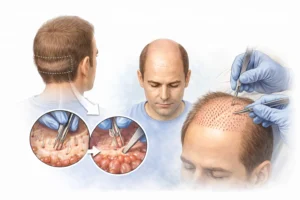
A hair transplant is a minimally invasive surgical procedure that transfers healthy hair follicles from a donor area (usually the back or sides of the scalp) to thinning or bald regions. It is commonly performed by trained dermatologists or plastic surgeons.
The procedure is typically recommended when non-surgical treatments no longer provide effective results.
Conditions Treated With Hair Transplant Surgery
Hair transplant surgery is used to manage permanent hair loss caused by:
- Androgenetic alopecia (male or female pattern baldness)
- Alopecia areata (in selected stable cases)
- Hormonal or thyroid-related hair loss
- Hair loss due to burns, trauma, or surgical scars
Types of Hair Transplant Procedures
1. Follicular Unit Strip Surgery (FUT / FUSS)
In FUT, a thin strip of scalp is removed from the donor area. Individual grafts are then extracted from the strip and implanted into the recipient area. The donor site is sutured, leaving a linear scar that is usually concealed by surrounding hair.
2. Follicular Unit Extraction (FUE)
FUE involves extracting individual hair follicles directly from the donor area. These follicles are then implanted into thinning areas. FUE is widely preferred due to minimal scarring and faster recovery.
Both techniques are performed under local anesthesia, and the choice depends on hair quality, extent of hair loss, and patient preference.
Why Do International Patients Choose India for Hair Transplant?
India is one of the leading destinations for hair restoration due to:
- Cost Advantage
Treatment costs are often 70–80% lower than in the USA, UK, or Europe. - Experienced Surgeons
Indian specialists perform a high volume of hair transplant procedures annually. - Advanced Techniques
Clinics offer FUE, DHI, and robotic hair transplantation using modern equipment. - International Standards
Many hospitals and clinics follow NABH or JCI-aligned safety protocols. - Medical Tourism Support
End-to-end assistance for travel, accommodation, and post-procedure follow-ups.
Organizations like Sanjivani Care help international patients navigate treatment planning, hospital coordination, and recovery support, ensuring a smoother medical travel experience without making medical promises or guarantees.
Medical Disclaimer
This content is for informational purposes only and does not replace professional medical advice. Hair transplant suitability, outcomes, and costs vary by individual. Always consult a qualified healthcare professional for diagnosis and personalized treatment planning.