
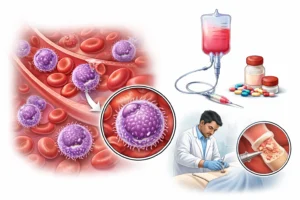
Hairy Cell Leukemia (HCL) is a rare and slow-progressing blood cancer that primarily affects B-lymphocytes. Although uncommon, this condition is highly responsive to modern therapies, and many patients achieve long-lasting remission with appropriate treatment.
India has emerged as a preferred destination for Hairy Cell Leukemia treatment due to its advanced oncology infrastructure, experienced hematologists, and comparatively affordable care. With support from trusted healthcare facilitators such as Sanjivani Care, international patients can navigate diagnosis, treatment planning, and hospital coordination with clarity and confidence.
How Much Does Hairy Cell Leukemia Treatment Cost in India?
The cost of Hairy Cell Leukemia treatment in India generally ranges between USD 3,000 to USD 6,000, depending on the therapy selected, disease status, hospital category, and individual patient needs
Estimated Cost by Treatment Type
| Treatment Option | Cost Range (INR) | Cost Range (USD) |
| Chemotherapy (Cladribine / Pentostatin) | ₹1,50,000 – ₹2,50,000 | $1,800 – $3,000 |
| Targeted Therapy (BRAF inhibitors) | ₹1,80,000 – ₹3,50,000 | $2,200 – $4,200 |
| Immunotherapy (Rituximab) | ₹1,00,000 – ₹2,00,000 | $1,200 – $2,400 |
| Diagnostic Investigations | ₹20,000 – ₹50,000 | $240 – $600 |
These estimates reflect treatment-related expenses. The total cost may vary based on treatment duration, hospital stay, and supportive care requirements.
Factors That Influence Hairy Cell Leukemia Treatment Cost
Several clinical and non-clinical elements affect the overall cost:
- Choice of Therapy – Chemotherapy is usually less expensive than targeted or biologic treatments
- Stage and Disease Activity – Relapsed or refractory cases may require additional therapy
- Hospital Infrastructure – Premium and internationally accredited hospitals may charge higher fees
- Physician Expertise – Senior hematologists and oncologists may have higher consultation charges
- City of Treatment – Metro cities tend to have higher operational costs
- Diagnostic Complexity – Genetic testing, flow cytometry, and marrow studies add to expenses
- Hospitalization & Supportive Care – Blood transfusions, growth factors, and monitoring increase cost
Top Hospitals for Hairy Cell Leukemia Treatment in India
India hosts several tertiary care centers with strong hematology-oncology programs, including:
- Apollo Hospitals (Chennai, Delhi, Hyderabad)
- Fortis Memorial Research Institute, Gurugram
- Medanta – The Medicity, Gurugram
- Max Super Specialty Hospital, New Delhi
- Kokilaben Dhirubhai Ambani Hospital, Mumbai
- Artemis Hospital, Gurugram
- Paras Hospital, Gurugram
- Marengo Hospitals, Gurugram
What Is Hairy Cell Leukemia?
Hairy Cell Leukemia is a chronic B-cell leukemia characterized by abnormal lymphocytes that appear “hair-like” under microscopic examination. These cells accumulate in the bone marrow and spleen, suppressing normal blood cell production and weakening immune function.
The disease typically progresses slowly and responds well to therapy when diagnosed and managed properly.
Common Signs and Symptoms
Early-stage HCL may be asymptomatic. As the disease advances, patients may experience:
- Ongoing fatigue and weakness
- Frequent or severe infections
- Easy bruising or bleeding
- Abdominal fullness due to enlarged spleen
- Bone discomfort
- Unintentional weight loss
Because these symptoms overlap with other blood disorders, specialized testing is essential.
How Hairy Cell Leukemia Is Diagnosed
Diagnosis involves a combination of laboratory and imaging investigations:
- Complete Blood Count (CBC) showing pancytopenia
- Peripheral blood smear revealing hairy lymphocytes
- Bone marrow aspiration and biopsy
- Flow cytometry (CD11c, CD25, CD103, Annexin A1)
- BRAF V600E mutation testing
- Ultrasound or CT scan for spleen assessment
Treatment Options for Hairy Cell Leukemia
Management depends on symptoms, blood counts, spleen size, and disease activity. Some stable patients may initially undergo observation (“watchful waiting”).
1. Chemotherapy (First-Line Therapy)
Purine analogs remain the gold standard:
- Cladribine (2-CdA)
- Pentostatin
These drugs achieve remission in a large majority of patients after a single treatment course.
2. Targeted Therapy
Used for relapse or resistance:
- BRAF inhibitors (e.g., vemurafenib)
- Moxetumomab pasudotox (targets CD22)
3. Immunotherapy
- Rituximab (anti-CD20 monoclonal antibody)
- Often combined with chemotherapy or used in selected cases
International Patient Support in India
Patients traveling from abroad often require logistical and administrative assistance in addition to medical care. Through coordination with Indian hospitals, Sanjivani Care supports international patients by facilitating:
- Treatment planning and hospital selection
- Appointment scheduling and medical opinions
- Medical visa guidance and documentation
- Airport transfers and local transportation
- Accommodation arrangements near hospitals
- Language interpretation services
- Post-treatment follow-up coordination
This structured support allows patients and families to focus on recovery rather than logistics.
Why Consider Sanjivani Care?
Sanjivani Care is a healthcare facilitation and medical tourism company in India that assists patients in accessing reliable hospitals, experienced specialists, and transparent treatment pathways. The organization focuses on coordination, patient education, and continuity of care without promoting specific outcomes or guarantees.
Medical Disclaimer
This content is for informational purposes only and does not replace professional medical advice. Diagnosis and treatment decisions must be made by qualified healthcare professionals based on individual patient evaluation.