
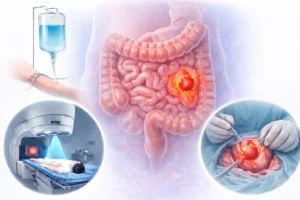
Small intestine cancer is a relatively rare gastrointestinal malignancy, yet it often requires complex, multi-disciplinary care. Many patients from around the world choose India for small intestine cancer treatment because of its combination of advanced medical technology, experienced oncologists, and cost-effective care.
This guide explains the treatment options, estimated costs, influencing factors, and why India has become a preferred destination for managing small intestine cancer—helping patients and families make informed, confident decisions.
What Is the Cost of Small Intestine Cancer Treatment in India?
The overall cost of small intestine cancer treatment in India generally ranges from USD 3,500 to USD 6,000, depending on the treatment approach and individual clinical needs .
Estimated Costs for Different Small Intestine Cancer Treatments
| Treatment Type | Average Cost (INR) | Approx. Cost (USD) |
| Resection Surgery | ₹1,00,000 – ₹8,00,000 | $1,200 – $9,600 |
| Bypass Surgery | ₹2,00,000 – ₹6,00,000 | $2,400 – $7,200 |
| Radiation Therapy | ₹1,50,000 – ₹3,00,000 | $1,800 – $3,600 |
| Chemotherapy | ₹30,000 – ₹3,00,000 | $360 – $3,600 |
| Targeted Therapy (per cycle) | ₹1,50,000 – ₹3,00,000 | $1,800 – $3,600 |
| Immunotherapy (per cycle) | ₹1,50,000 – ₹3,00,000 | $1,800 – $3,600 |
| Average Total Treatment Cost | ₹2,66,400 – ₹3,55,200 | $3,600 – $4,800 |
Figures are indicative and may vary based on hospital, city, and treatment plan.
Factors That Influence Treatment Cost
Several variables can impact the final cost of small intestine cancer treatment:
- Type of therapy required: Surgery, chemotherapy, radiation, or combination therapy
- Stage and extent of cancer: Advanced disease often requires multiple modalities
- Hospital category and location: Metro-city tertiary hospitals may charge higher
- Surgeon and oncologist expertise
- Use of advanced technologies: Laparoscopic or robotic surgery, PET-CT imaging
- Hospital stay duration and post-treatment care
Understanding Small Intestine Cancer
Small intestine cancer develops when abnormal cells grow uncontrollably in the tissues of the small bowel. Although uncommon, it can be aggressive if not detected early.
Common pathological types include:
- Adenocarcinoma
- Gastrointestinal stromal tumors (GIST)
- Lymphoma
- Neuroendocrine (carcinoid) tumors
- Sarcomas
Treatment planning is individualized after evaluating tumor type, stage, and patient health status.
How Small Intestine Cancer Is Diagnosed
Doctors may use a combination of advanced diagnostic tests, such as:
- Endoscopy or capsule endoscopy
- Biopsy for histopathological confirmation
- CT scan, MRI, or PET-CT imaging
- Blood investigations and tumor markers
Accurate staging is essential to select the most appropriate treatment approach.
Treatment Options for Small Intestine Cancer
Surgery
The primary treatment in many cases. It may involve removing the affected portion of the intestine or performing bypass surgery to relieve obstruction.
Chemotherapy
Uses medications to destroy cancer cells or slow their growth.
Radiation Therapy
High-energy radiation may be used after surgery or for symptom control.
Targeted Therapy
Targets specific molecular changes in cancer cells, often with fewer side effects than traditional chemotherapy.
Immunotherapy
Stimulates the immune system to recognize and attack cancer cells, mainly in advanced cases.
Success Rates and Outcomes
Outcomes vary depending on tumor type and stage:
- Early-stage adenocarcinoma treated with complete surgical removal may achieve 5-year survival rates of approximately 50–70%.
- Advanced or metastatic disease often requires systemic therapy, where targeted agents and immunotherapy have shown encouraging results.
Early diagnosis and timely treatment significantly improve prognosis.
Leading Hospitals for Small Intestine Cancer Treatment in India
- Apollo Hospitals (Chennai, Delhi, Hyderabad)
- Fortis Memorial Research Institute, Gurugram
- Medanta – The Medicity, Gurugram
- Max Super Speciality Hospital, New Delhi
- Kokilaben Dhirubhai Ambani Hospital, Mumbai
- Artemis Hospital, Gurugram
- Paras Hospital, Gurugram
- Marengo Hospital, Gurugram
These centers are equipped with modern oncology infrastructure and experienced multidisciplinary teams.
Why Patients Choose India for Treatment
- Affordable treatment compared to Western countries
- Advanced diagnostic and surgical technologies
- Highly trained oncologists and surgeons
- Comprehensive care under one roof
- Short waiting times
- Availability of supportive therapies and rehabilitation services
How Sanjivani Care Supports International Patients
Sanjivani Care is a medical tourism and healthcare facilitation company in India that helps international patients navigate their treatment journey with clarity and confidence.
Their support may include:
- Assistance in selecting appropriate hospitals and specialists
- Coordination of medical opinions and treatment plans
- Support with travel logistics and medical visas
- Accommodation arrangements
- On-ground coordination during hospital visits
The focus remains on enabling patients to access reliable information, transparent options, and coordinated care—so they can concentrate on recovery.
Medical Disclaimer
This content is for informational purposes only and does not replace professional medical advice, diagnosis, or treatment. Always consult a qualified healthcare provider for personalized medical guidance.