
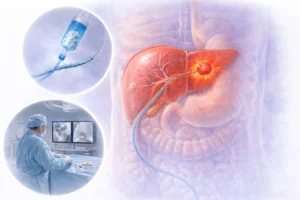
Transarterial Chemoembolization (TACE) is a minimally invasive, image-guided therapy widely used in the management of liver cancer and certain metastatic liver tumors. By delivering chemotherapy directly to the tumor and simultaneously restricting its blood supply, TACE allows for targeted cancer control while limiting systemic exposure.
In India, the cost of TACE typically ranges between USD 2,000 and USD 5,000 per session, depending on individual clinical requirements and hospital-related factors. This affordability, combined with advanced medical infrastructure and experienced specialists, has positioned India as a preferred destination for patients seeking high-quality cancer care.
Sanjivani Care supports international and domestic patients throughout their treatment journey by coordinating hospital appointments, assisting with medical opinions, and facilitating smooth care pathways across leading Indian hospitals.
TACE Cost in India vs. Other Countries
| Country | Approximate Cost per Session |
| India | USD 2,000 – USD 5,000 |
| United States | USD 14,000 – USD 20,000+ |
| Turkey | USD 7,000 – USD 10,000 |
| UAE | USD 9,000 – USD 12,000 |
Costs are indicative and may vary based on clinical complexity and hospital selection.
What Influences the Cost of TACE in India?
Several variables can affect the overall expense of transarterial chemoembolization:
- Cancer Type and Stage
Advanced or multifocal liver tumors may require multiple sessions, increasing total cost. - Number of Treatment Sessions
Some patients respond well after one session, while others may need repeated treatments. - Hospital Choice and City
Large metropolitan hospitals and premium centers may charge higher fees due to advanced facilities and infrastructure. - Physician Expertise
Highly experienced interventional radiologists and oncology teams may command higher professional charges. - Medications and Embolic Materials Used
Imported or specialized drugs and embolic agents can raise procedural costs.
Sanjivani Care helps patients understand these variables clearly and obtain transparent cost estimates before treatment begins.
Top Hospitals in India Offering TACE
India is home to several renowned centers with strong interventional oncology departments, including:
- Fortis Memorial Research Institute, Gurugram
- Apollo Hospitals (multiple locations)
- Medanta – The Medicity, Gurugram
- Max Super Speciality Hospital, New Delhi
Hospital selection is usually based on tumor characteristics, physician expertise, and patient preferences.
Understanding Transarterial Chemoembolization (TACE)
TACE is designed to attack liver tumors through two complementary mechanisms:
- Delivering a high concentration of chemotherapy directly into the tumor’s blood vessels
- Blocking those vessels to deprive cancer cells of oxygen and nutrients
Unlike systemic chemotherapy, which circulates throughout the body, TACE focuses treatment within the liver, reducing overall side effects.
TACE may be used for:
- Primary liver cancer (hepatocellular carcinoma)
- Liver-dominant metastatic cancers
The procedure is generally well tolerated and allows for faster recovery compared to open surgical approaches.
Types of TACE Used in Cancer Treatment
Conventional TACE
Chemotherapy is mixed with an embolic substance and injected directly into tumor-feeding arteries.
Drug-Eluting Bead TACE (DEB-TACE)
Microscopic beads loaded with chemotherapy release medication slowly over time, enhancing local drug exposure.
Radioembolization
Tiny radioactive microspheres are delivered to tumors, combining embolization with internal radiation.
Transarterial Radioembolization (TARE)
A refined form of radioembolization that allows precise targeting with minimal impact on healthy tissue.
Bland Embolization
Uses embolic agents alone without chemotherapy to block tumor blood supply.
Combination Therapy
TACE may be integrated with surgery, ablation, targeted therapy, or immunotherapy based on clinical needs.
How the TACE Procedure Is Performed
- Local anesthesia or conscious sedation is administered
- A small catheter is inserted through an artery in the groin or wrist
- Imaging guides the catheter to liver tumor vessels
- Chemotherapy is delivered directly into the tumor
- Embolic agents are injected to block blood flow
- Catheter is removed and the entry site is sealed
Patients are typically observed overnight and discharged within 1–2 days.
Recovery After TACE
Most patients experience mild, temporary symptoms such as:
- Low-grade fever
- Fatigue
- Nausea
- Abdominal discomfort
These usually resolve within a few days with medication and rest. Normal activities can often be resumed within a week.
Why Patients Choose India for TACE Treatment
- Significantly lower treatment costs compared to Western countries
- Internationally accredited hospitals (JCI, NABH)
- Experienced interventional radiologists and oncology teams
- Access to advanced imaging and embolization technologies
- English-speaking medical staff and coordinated patient services
Sanjivani Care assists patients with medical opinions, hospital coordination, travel planning, and post-treatment support, ensuring a smooth and informed treatment experience.
Conclusion
Transarterial Chemoembolization has become an essential option for managing liver tumors, offering targeted treatment with relatively quick recovery. India combines affordability with advanced expertise, making it a practical choice for patients worldwide. With guidance from healthcare facilitation companies like Sanjivani Care, patients can navigate their treatment journey in India with clarity, confidence, and reliable support.
Medical Disclaimer
This content is for informational purposes only and does not replace professional medical advice. Treatment decisions should always be made in consultation with a qualified healthcare provider.